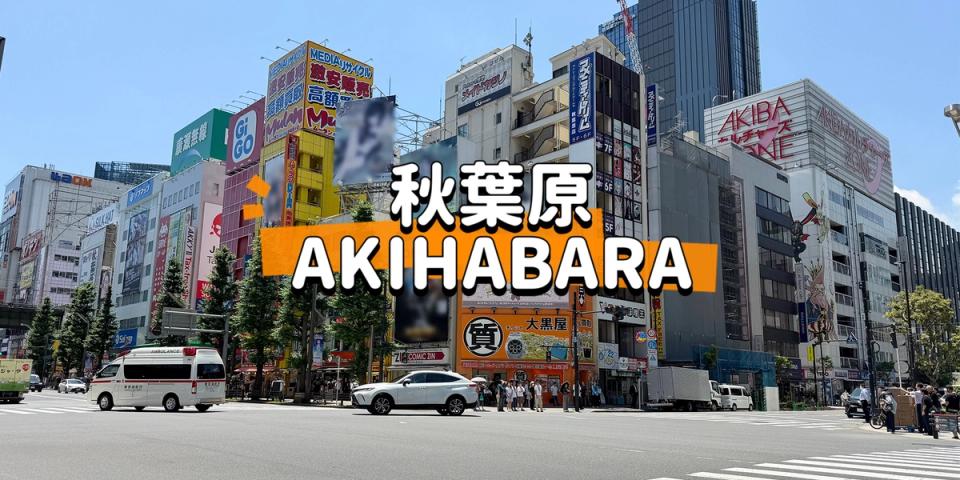

Our company, KOMODO, which develops NIUHI, has its Tokyo office located in Akihabara, the so-called "otaku* town."
Following our Ikebukuro edition, this time I will take a closer look at what makes Akihabara such a unique place and how it has evolved over the years.
*otaku: a term referring to people deeply passionate about anime, manga, games, and related subcultures.
For those familiar with otaku culture, you may have already heard the name Akihabara, or you may have even visited or are planning to visit the area.
In this article, I would like to explore what exists and what used to exist in this place where all kinds of otaku, including fans of anime, manga, games, and more, gather. Drawing on the real experiences of fellow otaku, I will cover everything from physical locations to the appeal and unique atmosphere that make Akihabara so special.
Where is Akihabara?
Akihabara is located in a very convenient area in central Tokyo, the capital of Japan. It developed around the major terminal station, Akihabara Station. In addition to the many train lines that serve it, it is also easily accessible from major airports and Shinkansen stations.
What can you find in Akihabara now?
Here, a wide variety of stores related to culture centered on anime, manga, and games are concentrated. You can find just about anything you can imagine, including original works, figures, and plastic model kits. There are also many "concept cafés" with unique styles of service, such as maid cafés.
However, what originally made Akihabara such a unique district was electronics, such as PCs and home appliances. As a symbol of this history, the main street of Akihabara is still called the "Electric Town" today.
Akihabara and Me
At the core of my self-awareness as an otaku, there was a vague sense of belonging to Akihabara culture.
About 20 years ago, I was struggling to fit into my school community and sought refuge in the world of the internet. I developed a strong admiration for Akihabara, which I saw as the place in the real world that was closest to the internet. As depicted in the novel "Akihabara@DEEP" and the drama "Densha Otoko," Japanese internet culture at that time often used Akihabara as its setting.
It was about 10 years ago that I first set foot in what could be described as a kind of "paradise on earth." This was around the time I had already been an otaku for over ten years. There were many goods I had wanted, and stores I had long admired, and I still remember how dazzling it all felt, both physically and emotionally.
However, I also had a slightly different impression from the Akihabara I had imagined. There was simply an overwhelming amount of "3D moe*." The city I had admired had changed in an unexpected direction. (Just to be clear, I would like to note that I do not dislike this culture.)
*3D: real-life people, as opposed to fictional characters
*moe: a feeling of strong affection or emotional attachment toward fictional characters or idols, often based on their appearance or personality
Among all this, I visited a building called "Radio Kaikan," which, while incorporating new elements, still features a large number of stores selling DIY PC parts and strongly evokes the classic Akihabara atmosphere. Even today, it has not changed in that regard, and every time I visit, it gives me a comforting feeling, as if I am returning to my roots.
KOMODO Otaku Survey
Fortunately, KOMODO has many team members who know Akihabara inside and out. This time, I asked some of them to answer a survey on the topics below:
Q1. When did you first visit Akihabara, and what brought you there?
Q2. What are your impressions of Akihabara today?
Q3. What's one place in Akihabara that you would recommend?
Q4. Is there anything else you'd like to share?
S (Female) – An otaku from the author's generation who grew up even closer to Akihabara.
Q1.
I first visited Akihabara when I was in the third or fourth grade of elementary school. At the time, merchandise featuring my favorite character was only available in Akihabara, at least within Tokyo, so my family took me there.
Q2.
My impression of Akihabara today is that it's a great place for beginners to explore Japanese hobbies and pop culture. It's almost like the Ginza of otaku culture, with countless hobby shops and anime-related stores packed into a relatively small area, making it a fun place to explore on foot. Even if you're not a hardcore fan, anyone interested in Japanese hobbies or anime culture can have a great time there. To me, it's a uniquely Japanese sightseeing destination that's easy for anyone to enjoy.
Q3.
My recommendation is the three Daily Yamazaki convenience stores located within about 200 meters of one another, near the Showa-dori Exit and Iwamotocho Station.
Here's a little-known tip: the stickers for the annual "Yamazaki Spring Bread Festival" promotion are usually only included with bread products. However, at these stores, you can also get the stickers when you buy rice balls and boxed lunches.
Q4.
When I first visited Akihabara, I thought it was a strange, gloomy place where people were selling what looked like junk on the street. Now that I'm an adult, I realize those were actually electronic components, and I completely understand why people need them!
I (Male) – A longtime Akihabara enthusiast with extensive knowledge of PCs, gaming, and technology.
Q1.
I think my first visit to Akihabara was when I was about four or five years old, when my parents took me to the Transportation Museum, which was located near Manseibashi at the time. As far as I can remember, that was my very first visit to Akihabara.
Q2.
It's a little sad to see that there are far fewer specialty shops dedicated to things like PC parts than there used to be. As a result, opportunities to talk with knowledgeable staff or attend in-store events have declined dramatically. At the same time, though, all kinds of subculture-related shops have opened up over the years. Even if they're focused on different interests, they've brought new energy to the area, and I think Akihabara has evolved into a lively district in a different way.
Q3.
My recommendation is Kanda Myojin Shrine! Except during especially busy times, such as New Year's visits or major festivals, it's a peaceful place to relax, and I really enjoy its atmosphere.
Q4.
Come to think of it, there was a time when canned oden was all the rage, but I feel like I hardly ever see it these days. Even in the middle of summer, some shops would proudly sell it as "chilled oden."
Another thing that seems to have disappeared is stores playing promotional videos at their storefronts or the fierce competition over exclusive pre-order bonuses for new game releases. I also feel that this part of Akihabara's culture gradually faded away after Messe Sanoh* closed.
*Messe Sanoh was a well-known game store that carried titles across a wide range of genres. It closed in 2012.
That wraps up our look at Akihabara, including a few things you might not have known about this famous "otaku paradise."
Before becoming Japan's iconic electronics district, Akihabara was home to a major produce market that attracted a very different crowd from the one it does today.
It will be exciting to see how Akihabara continues to evolve in the years to come!
About the Author
I'm shimichan, from a rural corner of Kansai, Japan. I joined KOMODO in 2024.
At NIUHI, I create original content and mainly work with Japanese indie creators.
A long-time resident of the internet since childhood.