From a podcast about manga to a publisher bringing Japanese indie manga to the world — Manga Mavericks has grown into a unique presence in the manga industry.
In this interview, we explore their journey, their passion for indie manga, and what drives their mission to connect creators and readers across cultures.
NIUHI (now KOMODO Manga & Comics):
Manga Mavericks originally started as a podcast and has since grown into an indie manga publishing label that licenses and publishes Japanese manga in English. What inspired you to start Manga Mavericks, and what led you to expand from a podcast into a publishing label?
Manga Mavericks:
We started up the Manga Mavericks podcast in 2016 with the goal of discussing manga as both a medium and as an industry. At the time, most manga podcasts were focused on reviews, so we wanted to report and discuss industry news as well as conversations happening in the manga community, and invite a diverse group of fans, critics, and professionals on the show to discuss manga topics from many different perspectives. Over the years, we’ve been able to host many professionals working in the manga industry, including artists, editors, translators, and letterers, to discuss their projects, experiences, and the process of creating, localizing, and publishing manga. We’d also seen the indie manga market expand considerably over the past decade thanks to publishers like Star Fruit Books, Glacier Bay Books, and Irodori Comics, who sought out and worked with eclectic artists who were creating and self-distributing their manga and doujins.
After spending nearly a decade learning about the ins-and-outs and what goes into licensing and distributing manga overseas, we were emboldened to enter the manga publishing industry ourselves. Through our trips to comic markets in Japan and exploration into the indie manga scene, we had been introduced to incredibly creative, interesting, and exciting manga being self-published by talented creators. We felt there was an opportunity to introduce these manga to new audiences by working directly with these creators to license, localize, and distribute their titles overseas. We took a chance and reached out to a few artists with our idea, and graciously, they took a chance on us, and gave us their blessing to publish their work in English.
Thanks to the wealth of connections, experience, and positive reputation we have built up in the manga community over the past ten years, we received an enthusiastic reception to our publishing venture. We were able to learn the ropes of manga publishing from generous mentors, and have been honored to work with some of the best and most talented manga localizers in the business. We also received an enormous amount of assistance from Red String Manga, who helped us establish our localization pipeline and editorial process, and worked on the localization of our three launch titles.
As we’ve continued to build up Manga Mavericks Books, we’ve been blessed to have received so much help from the friends, connections, and partners we’ve met over the past ten years that have helped us make the transition into manga publishing and have such a strong start right out of the gate. When we started up the podcast ten years ago, we never would’ve imagined it would lead us to where we are today.
NIUHI:
Can you tell us about what Manga Mavericks does today?
Manga Mavericks:
In 2023, Manga Mavericks expanded from a podcast into a full media outlet, and as of 2025, we are now a manga publisher. Today, Manga Mavericks has become a multimedia company producing entertainment across multiple mediums, including podcast production, anime and manga journalism, and manga localization and printing.
Our expansion has been driven by our own passion for the anime and manga industries, and the connections we’ve made by being involved in this space for so long. This has made us a very unique entity within the manga publishing industry, as even before the launch of our publishing division, we already had a lot of strong relationships with many existing Japanese and English manga publishers as well as localization teams.
Our goal is to continue to highlight amazing creators and stories from Japan, and help audiences find their next favorite manga.
NIUHI:
You mainly focus on publishing Japanese indie and doujin manga — what draws you to Japanese indie/doujin manga in particular? And when selecting titles, what are the key things you look for?
Manga Mavericks:
When we initially were planning the launch of Manga Mavericks Books, one of the people we had approached for advice was the late Matt Haasch, founder of the manga publisher Star Fruit Books. When we discussed the possibility of branching into publishing with him, he brought up that while the localization output of manga from traditional Japanese publishers has increased, the release of indie and doujin manga in English hasn’t seen nearly as much growth. So, we saw this market gap as an opportunity for us to highlight the amazing manga that has been coming out of the indie manga scene in Japan.
When we look at potential titles to license, we consider a few different components: the length of the manga, how appealing it would be to English readers, and whether the manga has a style unique to indie manga.
What’s interesting about evaluating indie manga is that the variety of stories and formats is far wider than traditionally published manga, as manga creators don’t necessarily have a set format that they have to adhere to.
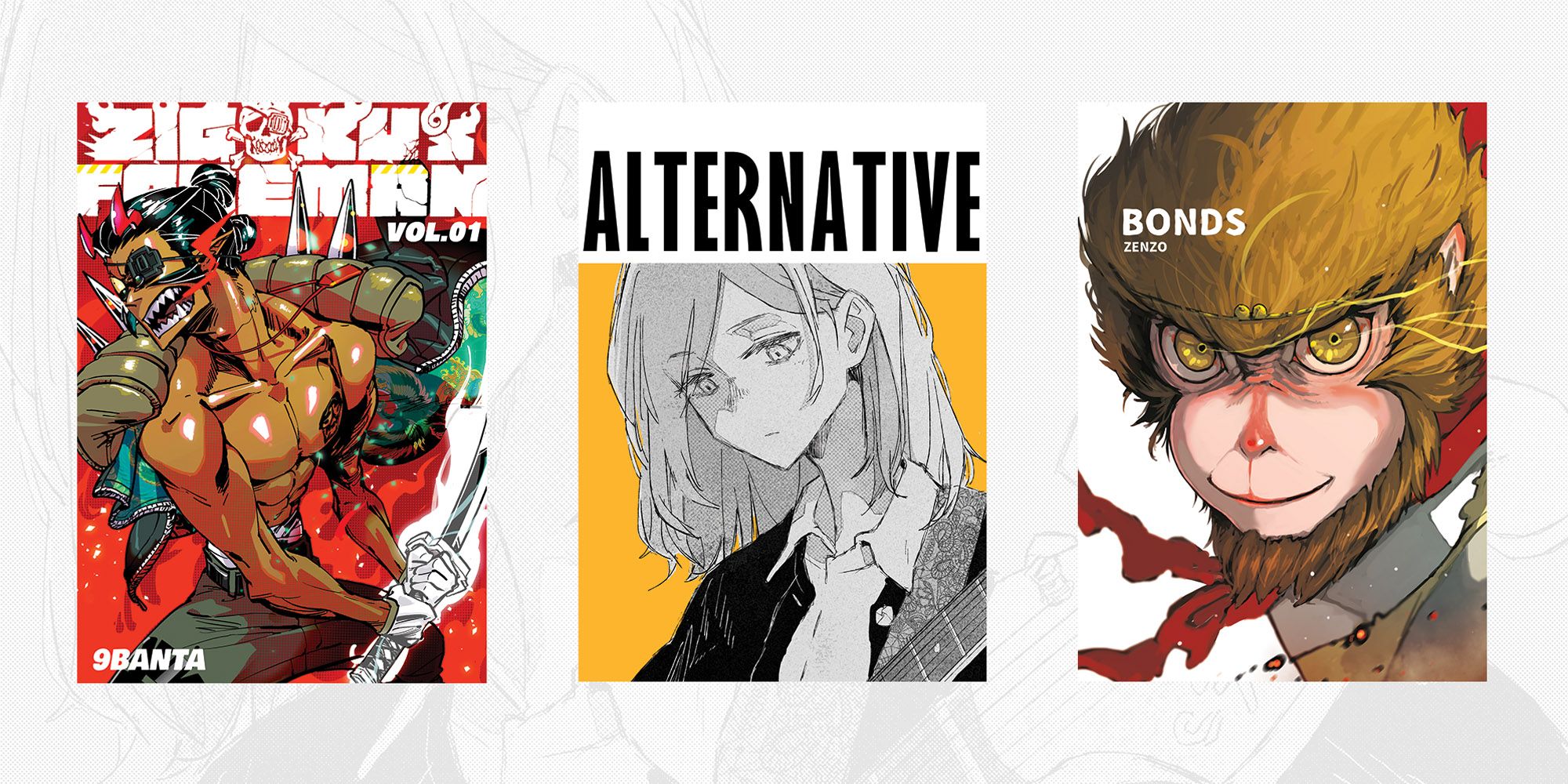
One of our favorite examples to share is Zigoku’s Foreman by 9banta, which alternates between telling its story through both manga chapters and light novel prose chapters. It’s a story that would likely not work as a traditional manga serialization, but because of that, we felt compelled to release it in English. We want to show English readers that there is a much larger world of manga beyond what they normally see. We think the indie manga scene consistently highlights that.
NIUHI:
From your perspective, what are some key differences between the U.S. and Japanese indie manga scenes when it comes to market structure, how creators work, and overall culture?
Manga Mavericks:
The U.S. indie manga market, in comparison to Japan’s, is still in a much earlier stage of development, so at this stage, they still feel like different beasts. That said, one thing you notice with indie manga creators based in the U.S. is that there is a much larger focus on online presence and distributing your manga through online platforms. In comparison, while Japanese indie manga creators have become more active online in recent years, you will still find a number of manga artists at COMITIA and other events that have limited online presence and solely focus on selling their work at events.
As an example, one of the authors we work with is Takuji Umihara, who draws an indie manga called The Pipe Machine. Umihara-sensei has been drawing his manga almost entirely analog since 1989, but chooses to have no social media presence at all. He doesn’t even have a phone! You would only ever discover his manga if you were to attend an event like COMITIA and visit his booth, but that is by design.
This is a situation that feels very unique to the Japanese manga market because independent manga events are more common and significantly larger in scale compared to the U.S. At this time, there isn’t really any U.S. event on the scale of COMITIA that is solely focused on indie manga, so there ends up being a much larger reliance on online promotion to show your manga to other people.
Beyond this, the manga that are coming out of both the U.S. and Japan are very much built on the cultural influences of their creators. What’s really fascinating about many U.S. manga creators is that you’ll see their influences from not only anime and manga from Japan, but also media from the U.S. and other countries as well. The perspective is distinctly different from Japanese indie manga, but it’s definitely manga in its own right as well.
NIUHI:
As a manga publisher, what differences do you see between the U.S. and Japanese indie manga scenes?
Manga Mavericks:
Similar to published manga, the Japanese indie scene tends to be more esoteric in the subjects it depicts in its works. As in things like travel, cooking, and even deep dives into historical figures. The US indie market has some of these types of stories, but the Japanese indie market dives deeper into subjects that aren’t as cut and dry as action, romance, etc. We’ve also observed that there are many more creators in the Japanese indie market who draw and release books as a hobby without thoughts of going commercial, especially at COMITIA. In our interactions with creators, most of them are genuinely surprised that people are interested in publishing their works at all, much less overseas.
NIUHI:
I can see your personal passion and love for manga is the essential motivation that led you to where you are with Manga Mavericks. Can you share how you first discovered indie manga, and if there was a specific work or moment that really changed your perspective?
Manga Mavericks:
In 2019, we had the opportunity to read and review a selection of manga published by Irodori Comics and interview their CEO, On Takahashi, about the history and culture of doujin and indie manga publishing in Japan. These works were among the first self-published manga that had been licensed and localized in English that we encountered, and they really stood out in how experimental and playful they were. We could see the artists had full freedom to tell unconventional stories in unconventional formats. One work that particularly stood out was Yoimachi Meme’s Raincoat Kids and the Splish-Splash City, whose pages were presented in a horizontal layout as opposed to a traditional vertical layout, and was formatted to read left to right instead of right to left. Additionally, Meme employed other experimental elements in his art itself, including distorted wave-like lettering effects to reflect the deteriorating mental state of one of his characters. In the afterword of the book, Meme explained that he adopted these unconventional approaches to formatting the manga to mimic the experience of reading a children’s picture book, and noted that self-publishing was the only way he could explore telling a story in this manner.
Other works we read from Irodori also showed us how the medium and distribution methods for indie comics can influence their style and formatting. For example, manga that were structured as four-page manga chapters to best fit the format of posting on Twitter (X). We also saw how manga creators could use doujin as a testing ground to explore ideas that may then be later developed into works pitched to and released by a publisher. For example, Hiroyuki’s Two-Timing Fair and Square, a manga about a guy “two-timing” by dating two girls at once with their (reluctant) consent, was later developed a few years later into Girlfriend, Girlfriend, which became a long-running series in Kodansha’s Weekly Shonen Magazine. Hiroyuki was already an established manga creator with the hit series Aho Girl, but he still chose to first self-publish several doujin rather than pitch his one-shots directly to a publisher to explore various different ideas and concepts he had and distribute them directly to his readers and see which idea captured both his and their interest most. Having had the chance to read the original Two-Timing Fair and Square doujin long before it became a serialization, it was so cool to see Hiroyuki expand it into a series and compare how the concept had developed between the doujin and first chapter of the serialization. It also showed us how invaluable doujin and indie manga are for allowing authors to explore unconventional ideas in unconventional ways, refining and developing their craft and concepts.
Indie manga can be satisfying works of art in their own right, and they can also be proving and testing grounds for creators whose experimental ideas may very well evolve into the next big mainstream hit. However a creator chooses to see and approach their work, the common thread between all indie manga is the creative freedom self-publishing allows them to fully express, explore, and play around with their ideas and the format of comics. We believe that’s what helps make indie manga feel so personal, imaginative, and special.
NIUHI:
Many Japanese indie and doujin creators may not speak English. How do you discover these creators and build trust with them? When publishing English editions, what kinds of expectations or requests do you typically hear from creators?
Manga Mavericks:
We discover new artists in various ways. Some of them are recommended to us by fellow small publishers, our acquaintances, and artists that we’ve worked with in the past. Though our tried-and-true method is to note authors we see interesting stories or artwork from on social media and reach out to them with our intentions, either by email or DM. We’re honestly surprised at how many artists have responded to our inquiries and given us their trust despite how new we were to the scene.
As for expectations, the major advantage of working with artists directly is upfront communication. We haven’t had too many unique requests from authors aside from asking to see or be involved in the localization process as it occurs. It’s thanks to this that we’re able to ask them questions about their preferences for translations of terms or names, and the artist can see the completed localization before it goes out publicly. It’s through this process, in addition to constant social media promotion, that we’ve built trust with the creators.
NIUHI:
COMITIA and Comiket have become major hubs for indie manga creators and fans.
Any plans to go back to COMITIA or Comiket this year? And what excites you most about Japanese indie manga events like these?
Manga Mavericks:
Yes, our team has plans to attend either COMITIA or Comiket at least once this year, depending on our availability. What’s really exciting about the events is the constant output of new artists that appear there. You never leave either event feeling like you’ve seen every work being exhibited, and we think that’s a testament to just how vast the indie manga community is and its talent.
NIUHI:
We feel that indie and doujin manga have so much potential, but are still relatively invisible in the mainstream manga industry. What are your thoughts on the future of indie and doujin manga? And what do you think publishers, platforms, or communities can do to help support that future?
Manga Mavericks:
We feel there is a growing interest in indie manga and doujins, and that it will still play a crucial role in the development of new manga talent. In many ways, indie manga is a starting point for many manga creators for larger publications and serializations, especially since many Japanese publishers have portfolio reviews at events such as COMITIA already.
That being said, having indie manga overcome the larger shadow of the mainstream industry is a tougher task, especially outside of Japan. In the English market, readers often don’t actively distinguish between indie manga and mainstream manga, which means that readers may choose whether to buy and read a title based on the art, story, and overall cost of the book itself.
Before Manga Mavericks entered the publishing space, other publishers such as Irodori Comics, Star Fruit Books, and Glacier Bay Books had already made significant strides in building a dedicated audience for indie manga within English communities, but we think there is still more room for it to grow as more indie titles are released in English.
The biggest way to show support for indie manga is to read the manga from indie manga creators and share your enjoyment of it with other people. That not only motivates the manga creators to create more stories, but it also shows publishers that there is a continued audience for this work.
NIUHI:
In the Yatta-Tachi interview back in April 2025, you talked about visiting COMITIA in Japan and bringing back a suitcase full of books. What stood out to you most about discovering indie manga in person at events like COMITIA?
Manga Mavericks:
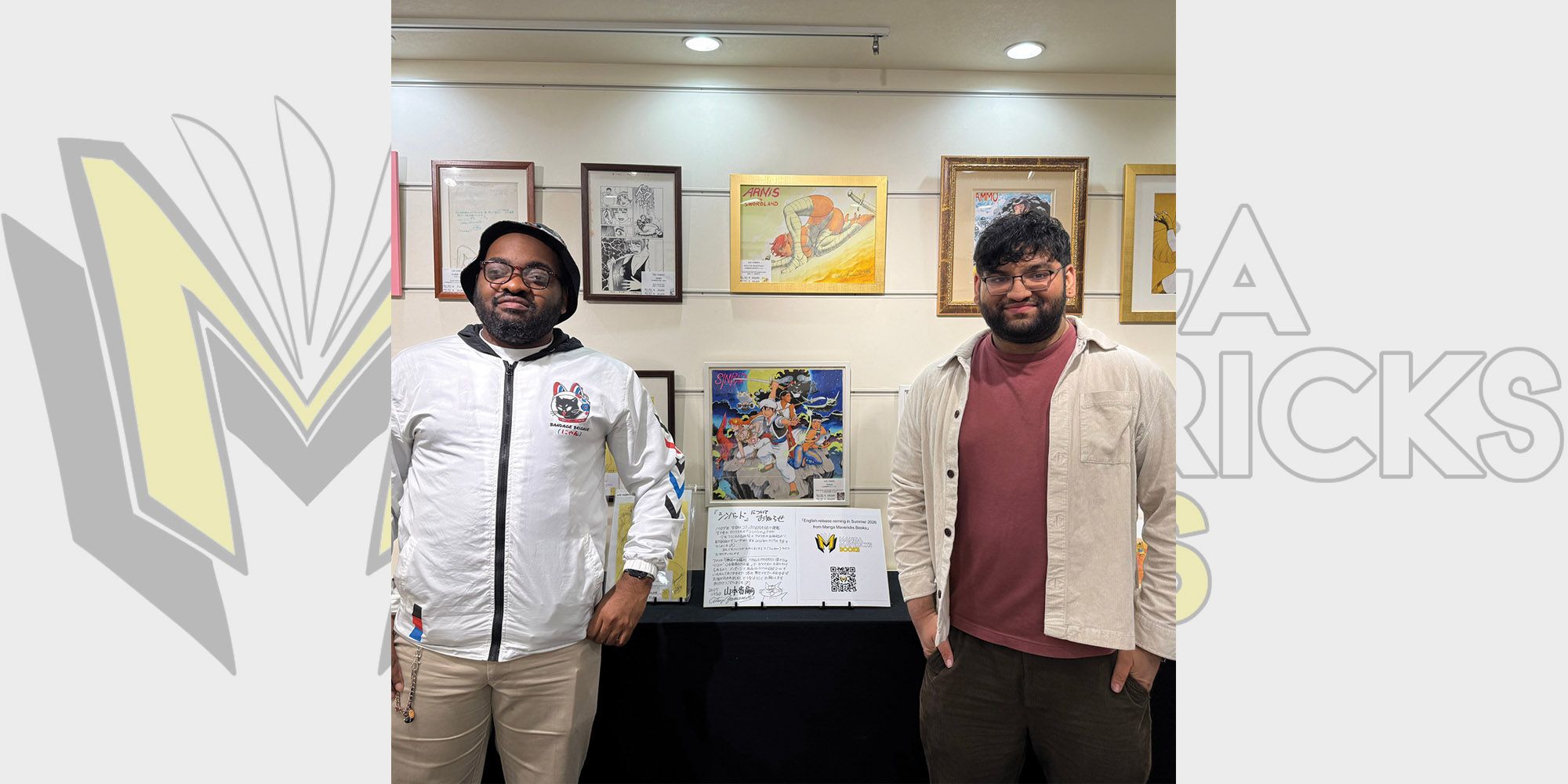
April 2025 was the first time we ever attended COMITIA, and it was an enlightening experience seeing how many talented manga artists had yet to be discovered by the mainstream market. What was most shocking, though, was seeing a range of manga that broke from the traditional publication conventions. COMITA has manga of all shapes and sizes, and in a way, it feels as though you are seeing the work of a manga creator in its rawest form. We highly recommend that manga fans visit events like COMITIA if they ever have the opportunity to do so.
From their journey into publishing to their deep passion for indie manga, Manga Mavericks continues to push the boundaries of what global manga can be.
In Part 2, we talk with Manga Mavericks about their partnership with NIUHI, their insights on how multilingual platforms can open new possibilities for creators around the world.
Coming next week — stay tuned!