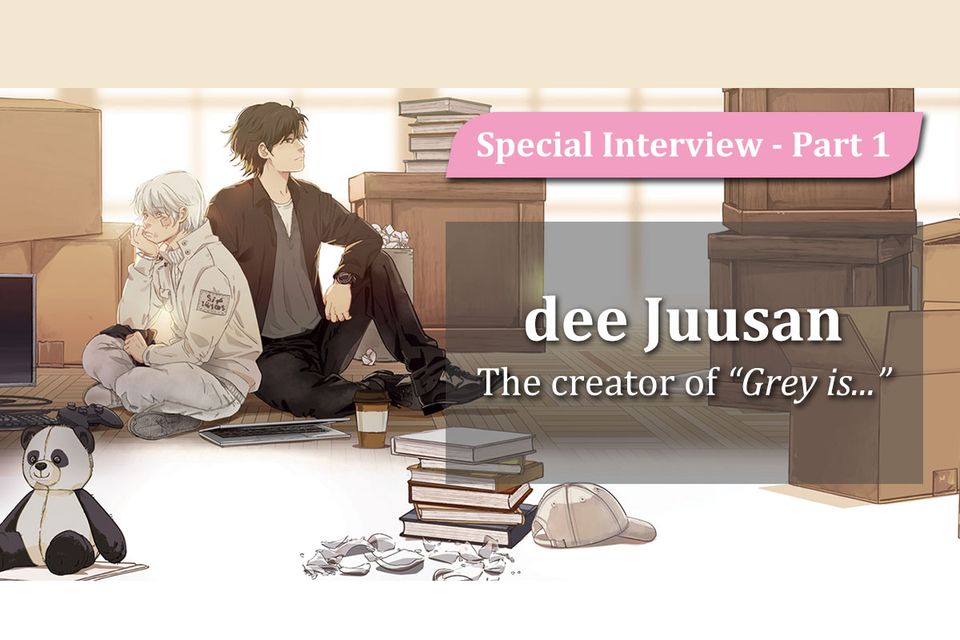
Some emotions stay with us long after we close a book.
In Grey is..., creator dee Juusan explores loneliness, friendship, vulnerability, and emotional isolation with striking honesty and care.
In this interview, we spoke about writing authentic emotions, understanding characters deeply, and the responsibility that comes with telling deeply human stories.
KOMODO Manga & Comics:
In another interview, I saw that you mentioned you originally weren’t very interested in manga or comics. What inspired you to start creating manga from there?
dee Juusan:
When I graduated university -and after being influenced by meeting Makoto Shinkai in 2008-, I decided that I want to try and follow his example by creating a short film on my own, because I had always wanted to tell stories visually and my favorite medium, at the time, was Anime/Animation. However, when I finally put pen to paper, I realized that I didn’t have the skills needed, so I thought I’d try honing my skills in art through manga, a medium that could realistically be created by one person.
It turned out to be the one form of storytelling that truly worked for someone like me, and I fell in love with it.
KOMODO Manga & Comics:
As a manga creator, is there anything you especially value when creating your works?
dee Juusan:
A joyous, and hurdle-free process.
This might sound like something a spoiled kid would say, but it’s more complex than it sounds. I’m willing to go to great lengths with everything outside of the drawing desk, even make things difficult for myself at times, just to preserve the part of this craft I value most: the creative process itself.
Also, as a writer, staying true to myself -within reason-, is the most valuable thing for me.
KOMODO Manga & Comics:
Where do your ideas for stories and characters usually come from?
dee Juusan:
From the life around me. Questions I have, emotions I want to express, conversations I’d like to put out there and messages I hope to convey to others or one I find are not talked about much.
I like to observe people and places so everything that stimulates my brain or
moves my emotions end up becoming an inspiration.
Even in settings and visual aesthetic, I take inspiration from what I feel carries a lot of stories within them.
Then, at some point, the story I’m writing becomes the inspiration itself, because
its characters and themes start demanding things from me. They push me to notice ideas, emotions, or subjects I might not have been interested in otherwise, but end up deeply inspired by once they become necessary to the story.
That process always introduces me to an even bigger world of inspiration.
It really is a loop.
KOMODO Manga & Comics:
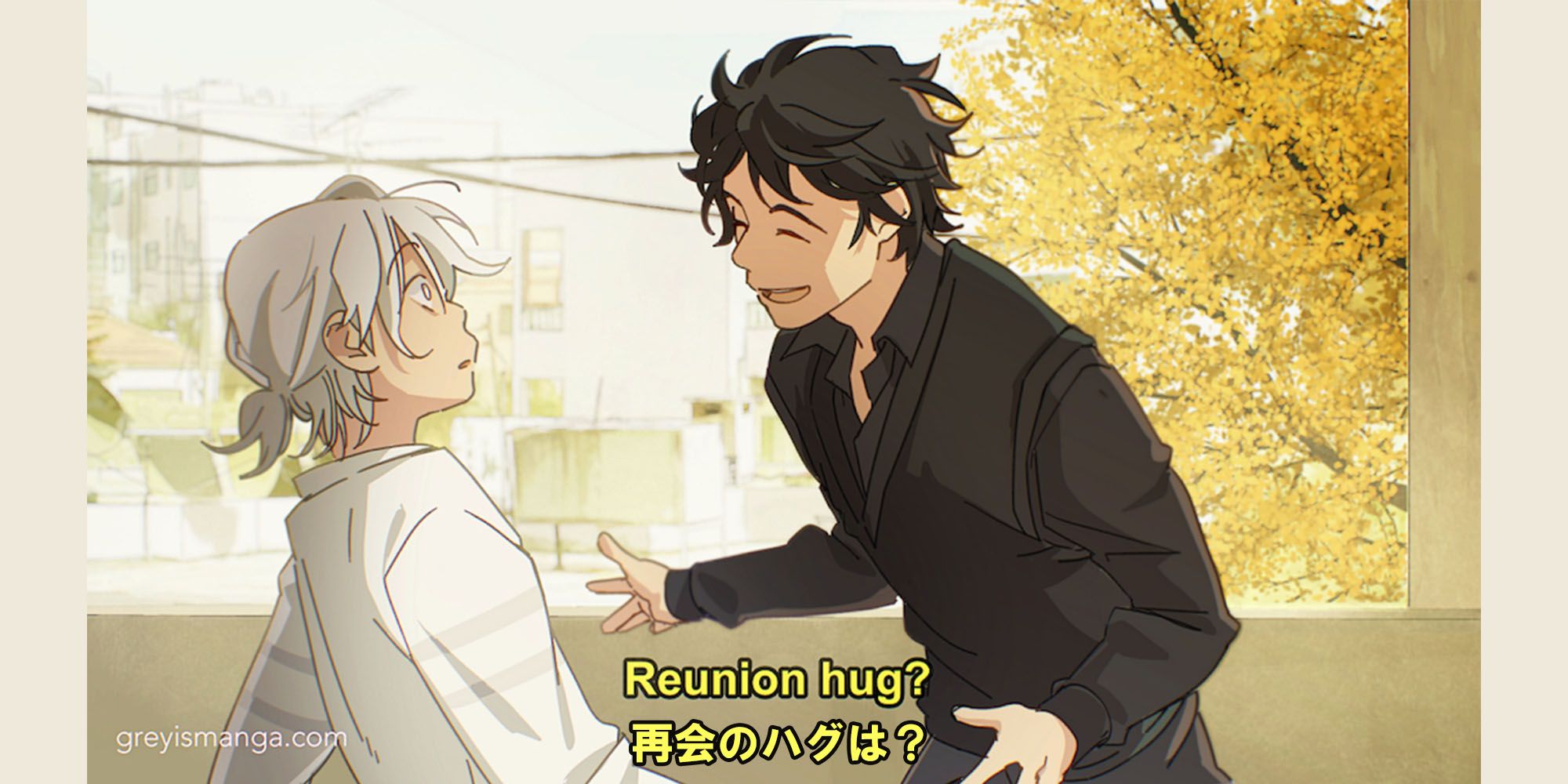
Grey is... portrays themes like friendship and loneliness in a way that feels incredibly real. I was especially struck by Black’s inner conflicts, anger, and the thoughts running through his mind — many of them felt deeply relatable and stayed with me long after reading. What inspired you to explore male friendship as a central theme in this story?
dee Juusan:
This is a challenging question, because where I started and the reasons I chose certain themes are still present, but they also keep evolving as time passes and society changes.
In general, I’ve always been very interested in platonic relationships: friendships, family bonds, mentor and student dynamics, work relationships, and so on. Both their importance in people’s lives, and the complexity within them, often feels overlooked or underexplored, especially in slice-of-life stories, which naturally gravitated me towards writing about them.
Many of us feel the pain of a friendship slowly fading or changing over time. But we also know the excitement of wanting to be closer to someone we admire, and the warmth of gradually becoming friends with someone who once felt out of reach.
Friendship breakups are real. Friendship crushes are real. So why don’t we see more stories exploring the different emotional experiences that come with platonic relationships?
Black and White in particular explores a very specific kind of friendship shaped by childhood and environment, so I wouldn’t say I’ve fully explored everything I want to say about friendship -especially male friendship- just yet.
From my humble point of view, there’s still a noticeable lack of grounded, modern slice-of-life stories centered on friendships between men. These relationships are often treated as secondary to romance, or only emphasized in genres with larger external stakes like war or fantasy. I’ve always wanted to explore them in a quieter, more everyday context.
Outside of that, I was also naturally drawn to male characters as a reader, and there are several themes around them that interest me deeply: loneliness, emotional repression, vulnerability, social pressure, status, even things like fashion and identity.
KOMODO Manga & Comics:
The characters in Grey is... feel very “real,” especially in the way they struggle with loneliness, identity, and the pressure to keep pretending everything is okay. There’s one line — “I couldn't keep up the act I was playing anymore” — that personally really stayed with me because it reflected how I felt at a certain point in my own life. Is there anything you especially keep in mind when writing your characters and their emotions?
dee Juusan:
I think it always comes back to authenticity and responsibility.
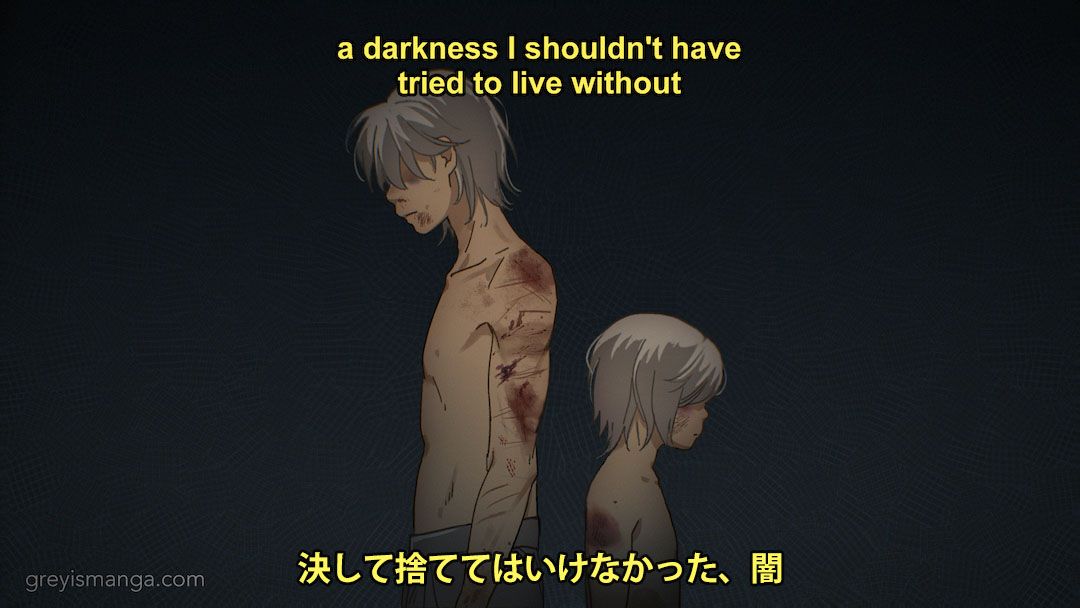
A lot of the emotions in Grey is... come from very real feelings and experiences, so I try to approach them carefully. My job as a manga writer is to take those deeply human emotions and weave fictional elements around them without downplaying them, romanticising them, or relying too heavily on cliches and overused tropes.
I never want a character’s loneliness, anger, or emotional collapse to exist just for aesthetic purposes or shock value. Even when characters are irrational or destructive, I try to understand them sincerely from their own perspective first. I think readers can feel when emotions are being treated honestly rather than used dramatically for effect.
At the same time, I also try to remember that people are never just “one thing.” Someone can be deeply lonely and still funny. Someone can be hurting while still acting cold, immature, or even cruel.
I think contradictions are part of what makes characters feel human.
KOMODO Manga & Comics:
Is there anything you especially pay attention to when portraying the emotional dynamics and relationships between characters?
dee Juusan:
- First and foremost, I try not to self-indulge. As a person who likes to create “moments” that are high in emotion and drama, I always have my editor's brain knowing where to draw the line.
- I also keep in mind the readers who only read the story without following extra trivia or commentary online, so I want the emotional dynamics to feel complete and genuine within the actual narrative.
- I take relationships very seriously, regardless of the type of relationship being portrayed. I like balancing sincerity with some comic relief, but without undercutting the emotions or sending mixed messages.
Being honest with the audience is probably the most important thing to me. If I build emotional tension, intimacy, or certain expectations between characters, I don’t want it to feel manipulative or purely there for engagement. I think audiences can tell when a story is hinting at something it never truly intends to explore, and that can leave people feeling misled or emotionally dissatisfied with the work. So I try to make sure the direction of a relationship is intentional, meaningful, and genuinely important to the narrative.
KOMODO Manga & Comics:
What kinds of scenes are the most fun for you to draw, and on the other hand, which ones do you find the most challenging?
dee Juusan:
From an artistic standpoint, I love drawing emotion-driven and dramatic scenes that are full of strong expressions and expressive body language the most, and I also enjoy losing myself in the details of urban or abandoned settings.
The characters and backgrounds that I’ve been drawing for the past 16 years are the most fun to draw because I have the needed mental library, so it goes from my brain to canvas instantly. The opposite is also true: when I’m working with new characters that I need to reference from their character sheet, or unfamiliar settings ー especially office settings, I find myself dragging myself towards the desk.
With Grey is... specifically, some of the emotionally darker and heavier subject matters are challenging to draw because I keep thinking about the responsibility I’m carrying towards the subject itself and the people who relate to it.
In some way, drawing these can feel easy because there’s enough emotional fuel (anger and disgust) that keeps the pen moving, but coming up with the best way to draw, and visually portray them, is challenging every single time.
KOMODO Manga & Comics:
I believe you have many fans in Japan as well, but have there been any reactions from overseas readers that particularly stood out or stayed with you?
dee Juusan:
There was a school girl who fell to her knees in tears when she met me, and promised to work on her English so she could understand more of the story, and work harder to create her own manga. There was also an old man who, after spending a long time looking at a scene between a father and son, cried at what he described as “genuine raw emotion” in the spread.
I honestly put a lot of work into telling stories, so I can’t say I’m not trying my best.
But the type of writing I do is very personal, and just like we’re self-aware of our own faults and shortcomings, I can clearly see them in my work too. Because of that, I’m never really able to see it the way other people do.
Every single reader who tells me that the story helped them, saved them, or inspired them to try and do better alongside Black and White leaves me deeply moved. Whether it’s someone saying it in just one sentence, or someone telling me -at length- how the story stopped them from hurting themselves in one way or another, those words stay with me for a very long time.
So in all honesty, every reaction stays with me. If it wasn’t for readers, I’d probably be far too critical of myself all the time.
Sometimes I think, “this person thinks it’s great, so who am I to dismiss their feelings about it?” In a way, they gave me a voice that could argue back against the louder internal ones. And because of that, I always promise myself to try even harder when creating this story.
KOMODO Manga & Comics:
For the first time, Grey is... Volume 1 is also available to read in Japanese on KOMODO Manga & Comics. How do you feel about your work being read in different languages?
dee Juusan:
It’s extremely exciting and I’m very thankful for KOMODO Manga & Comics for this kind opportunity!
Seeing my work available in different languages still feels a bit surreal, especially for a story like Grey is..., which relies heavily on language and nuance.
At the same time, I do keep an international audience in mind when I’m writing its themes and messages, so it’s something I’ve quietly hoped for. Hearing that it can reach more readers in different languages is very encouraging.
If the story can have a positive impact on readers, then I’m grateful for it to reach as many people as possible.
KOMODO Manga & Comics:
Grey is.... is still an ongoing story, but throughout the series so far, was there a particular emotion or message you most wanted to convey to readers?
dee Juusan:
Mainly, hope and perseverance.
Taking the time to understand yourself, so you can make peace with your past, either overcome it or use it to grow in the present, and then build a more realistic future.
The older I get, the more I realize that bad things will happen and good things are something we actively pursue. So if my readers are inspired not to give up, that would already be a win in my book.
KOMODO Manga & Comics:
Were there any scenes during the creation process that you personally felt especially emotionally connected to?
dee Juusan:
When I started writing the story in 2011, I already knew one of the major climax points we were eventually building towards years later.
So while I was working on chapter 45 in 2016, a character suddenly surprised me and said something that ended up making that future moment land in a much more emotional way than I originally planned.
I remember having to grab a towel to wipe the tears off my screen tablet. I get emotional very easily while working - almost constantly, honestly - but for tears to actually roll down my cheeks like that is a huge thing for me.
There are a few scenes that hit me that way, and they almost always involve a moment where a character surprises me with something unplanned, or a moment where I suddenly feel the passing of time and realize how long I’ve been living with these characters... how they changed, and how I changed alongside them.
It’s a very inspiring and almost otherworldly feeling.
KOMODO Manga & Comics:
Is there anything you’re especially excited about or looking forward to when it comes to reaching new readers with your work?
dee Juusan:
I think I’m especially excited about conversations, honestly.
Seeing people from completely different backgrounds connect to the same emotions in the story in their own ways is very inspiring.
Especially with a series like Grey is..., I find it fascinating to see readers discuss, argue over, analyze, and sympathize with different characters. Some completely misunderstand certain scenes, while others become emotionally attached to moments I never expected. At times, readers notice things I never consciously intended, or relate deeply to scenes I thought were very specific.
I’m always looking forward to seeing more discussions between readers themselves, and the possibility of the story finding people who needed it. Every time someone tells me they felt understood by a character or situation, it reminds me why I wanted to tell stories in the first place, and the reactions always teach me something too.
Stories stop belonging entirely to the author once people begin emotionally carrying them in different ways, and I think manga is a two-way street, a one-to-one experience between two people, author and writer, miles apart that happened to love the same universe, and I think that’s something really beautiful.
KOMODO Manga & Comics:
Lastly, would you like to share a message with your fans?
dee Juusan:
Thank you sincerely to everyone who has supported Grey is... and connected with it in one way or another.
It’s a very slow-burn, character-focused story that takes its time to unfold, especially because it deals with subjects like overthinking, loneliness, anxiety, and emotional isolation. Because of that, there were many moments where I chose to let emotions linger and breathe naturally rather than rushing through them for the sake of pacing or immediate payoff.
So it genuinely means a lot to me that readers have embraced the story as it is and allowed themselves to grow alongside the characters over time. Some emotions are repetitive and exhausting in real life too, and I wanted to portray that honestly.
Every message, interpretation, discussion, and emotional reaction stays with me for a very long time. I’m deeply grateful that these characters have managed to find a place in people’s hearts, and I’ll continue doing my best moving forward.
Thank you so much for reading.
Stories change when they reach new readers.
Next week, we’ll continue the conversation with a new interview about indie manga, multilingual platforms, and the future possibilities for creators and readers alike.
Coming next week — stay tuned!